
- May 14, 2024
- Jenn Lambert
Have you ever walked into a room and immediately felt at ease — without knowing why? Chances are, nature has something to do with it.
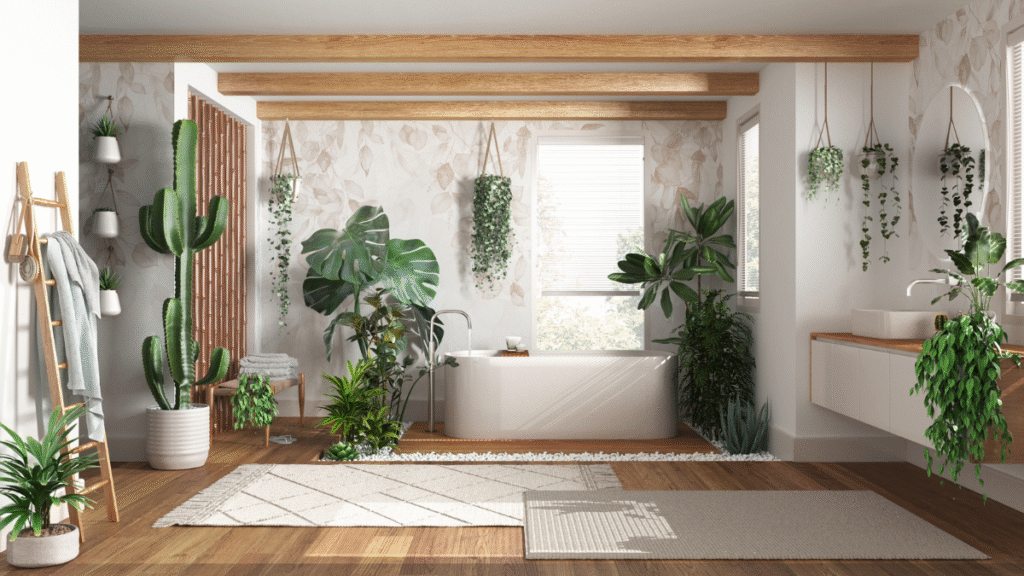
Natural light, organic materials, the sound of water, the presence of plants — these elements affect us deeply. In fact, research confirms what most of us already sense: we feel better when our environments connect us to the natural world.
This is the foundation of biophilic design.
What Is Biophilic Design?
Simply put, biophilic design is the intentional use of natural elements, materials, and patterns in built spaces to support human well-being.
Researcher Stephen Kellert described it this way: biophilic design isn’t about greening buildings or adding trees for aesthetics. Rather, it’s about restoring our fundamental connection to nature — within the spaces where we spend most of our lives.
In practice, this means designing with purpose. It’s the difference between placing a plant in a corner because it looks nice and thoughtfully considering how light, air, material, and texture work together. Ultimately, the goal is an environment where people genuinely feel better.
The outcomes are measurable. For example, studies show that exposure to natural elements reduces stress, improves focus, and supports emotional regulation. These effects show up in sleep quality, stress recovery, and how much you enjoy being home.
Where to Begin
Biophilic design doesn’t require a full renovation. In many cases, it doesn’t even require a contractor.
Instead, it starts with observation. Notice where light enters your home. Pay attention to which materials feel good to touch. Identify where the space feels alive — and where it feels flat.
From there, changes can be as simple or as considered as your situation allows. For homeowners who want professional guidance without a full-scale project, our Mini Design service was built for exactly this. We’ll help you identify what’s working, what isn’t, and give you a clear, confident direction forward — on your own timeline.
How to Bring Biophilic Design Into Your Home
Prioritize natural light. Before adding anything to a room, first maximize what’s already there. Pull back heavy window treatments. Then reposition furniture that blocks light from traveling through the space. Notice how the room shifts at different times of day, and design around that rather than against it.
Choose honest materials. Wood, stone, linen, and leather age well. Unlike synthetic surfaces, they show the passage of time in a way that feels alive. When selecting finishes, ask whether the material has a natural origin. More importantly, ask whether it will look better in ten years than it does today.
Use color the way nature does. Nature layers warm and cool tones, light and shadow, depth and highlight. Warm tones advance and energize a space. In contrast, cooler tones recede and settle. A cohesive room typically has both, even if one dominates. As a result, the space feels balanced rather than flat. Pay attention to how color moves you through a room and how it shifts with the light.
Add plants with intention. One well-placed plant does more than a collection of small ones scattered without thought. Consider scale, light requirements, and where your eye naturally lands. For instance, plants near windows, in corners that need grounding, or at varying heights, add life without visual clutter.
Consider water. Even a small water feature introduces sound — something most interiors lack entirely. Furthermore, research suggests that even images of water can lower heart rate. This isn’t decoration. It’s environmental psychology at work in your home.
Let nature inform pattern. Wallcoverings, textiles, and artwork that reference natural forms extend the biophilic effect. This is especially useful in rooms where access to direct light or outdoor views is limited. Even so, the impact is real — pattern alone can shift how a space feels.
Why Authenticity Matters
Biophilic design only works when it’s genuine.
A room filled with faux plants and printed stone veneer doesn’t produce the same effect as one built around real materials and honest choices. In other words, our nervous systems are more perceptive than we give them credit for.
That’s why biophilic design is less about trend and more about values. It asks what kind of environment you want to come home to — and then makes deliberate decisions in service of that answer.
Thinking About Your Own Home?
If you’re wondering how these principles might apply to your space, we’d love to talk. After all, every home is different — and so is every client’s vision for how they want to live in it.
Visit our contact page to start the conversation.
Lineage Design Build serves homeowners throughout Greater Grand Rapids, the Lakeshore, and surrounding West Michigan communities.